
|
| CASE STUDY |
Additional Resources
Project Profile
Location: Palo Alto, California
Venue: Children’s Center
System Type: Radiant Heating
Design Firm: MacDonald Architects
Installer: TBD
Uponor products mentioned in this case study
|
COMMERCIAL: Radiant Heating Systems
CHILDCARE CENTER
Downloadable Resources: Case Study (.pdf) | Text (.txt)
“Radiant floor heat keeps the kids warm during our cold, damp winters,” says Gail Jack, acting director of the Children’s Center in Palo Alto, Calif. “There are no cold drafts, so we can let even the youngest children romp and play on the floor in light clothing. The kids love the freedom, and our teaching staff has more flexibility and less worries.” The center selected Uponor radiant floor heating because innovative building design and functional efficiency are important to the university community. “We felt Uponor provided the best technology for the children and for the building itself, ” says Don MacDonald, president of MacDonald Architects, the San Francisco firm that designed the center.
He says that in comparison to other heating methods, radiant floor heating keeps kids warmer and healthier. In fact, the Children’s Center was able to enjoy more than just warm, cozy floors. “Radiant heat allows the center to provide a healthier environment, especially for allergy sufferers, because dust, pollen and other airborne irritants are not circulated, ” says Jack. “And floors dry quicker after cleaning up spills and frequent mopping, keeping slips and falls to a minimum.” Jack says experiencing radiant floor heating has convinced her it’s the best choice for the ultimate in comfort. “I still notice the building feels comfortable when I walk in on Monday mornings, even after it’s been vacant all weekend, ” says Jack. “And I’m reminded again and again of the benefits of radiant floor heating whenever I’m somewhere else and my feet get cold.”
Summary of Benefits Clean and Comfortable – Water circulates through Uponor’s durable crosslinked polyethylene (PEX) tubing beneath the floor to provide even, consistent warmth. The floor functions as a mild radiator, retaining heat and transmitting warmth to children, toys and furnishings in the room. Playtime and naptime are more comfortable with the warm floors, and radiant heat does not circulate dust, dirt, pollen and molds like forced-air heating systems. Plus, after cleaning the floors, they dry quickly and are less hazardous. Cost Effective – The Uponor system gives each room in the center an accurate, individual temperature control. The center’s heating bills are less than $500 per month in the winter season – up to 40% less than with conventional heating systems. And installation costs were two-thirds less than estimates for forced-air heat. Low Maintenance, High Performance – City inspectors required a pressure test at 100 psi – 10 times the normal operating pressure – and the Uponor system remained tight and dry. Even though the tubing is set in concrete, it survived the massive October 1989 World Series earthquake without a leak. From an operational standpoint, the radiant floor system has performed flawlessly with little or no maintenance.
Mechanical System Information The building features 6, 300 linear feet of Uponor PEX tubing installed in cement slabs. Water, heated by two 85, 000 BTU/h boilers, circulates through the tubing to the individual heat zones within the building. Each zone is controlled by its own thermostat for greater efficiency.
The design information in this case study is provided for illustrative purposes only. The actual requirements of similar projects will depend on regional climatic conditions, project-specific heat loss, owner expectations, applicable building codes, etc. Please contact your Uponor representative for assistance in designing your specific projects. # # # For more information about the benefits of cross-linked polyethylene (PEX) tubing, contact a reputable manufacturer, such as Uponor North America (www.uponor-usa.com). For editorial assistance, contact:
|
|||||||||||||||||||||||||||||||||
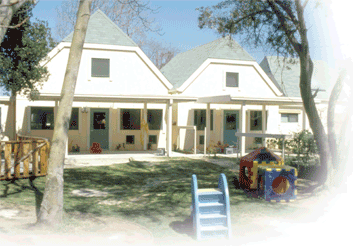 The floor is typically the play area of choice for most infants, toddlers and preschoolers. But at the Stanford University Arboretum Children’s Center, that’s just fine with their parents and teachers because the entire building is heated with an Uponor radiant floor heating system.
